The Wrong Question Everyone Asks
"Should I optimize for Google or for AI?"
This question reveals a fundamental misunderstanding about how AI search actually works. It assumes AI tools have their own separate ranking system, their own index, their own criteria for what content deserves visibility.
They don't. At least, not in the way most people think.
Understanding where AI answers actually come from changes how you approach optimization entirely. It reveals that most "AI SEO" advice is either redundant or impossible to act on. And it shows exactly where your efforts can make a real difference.
The Three Buckets
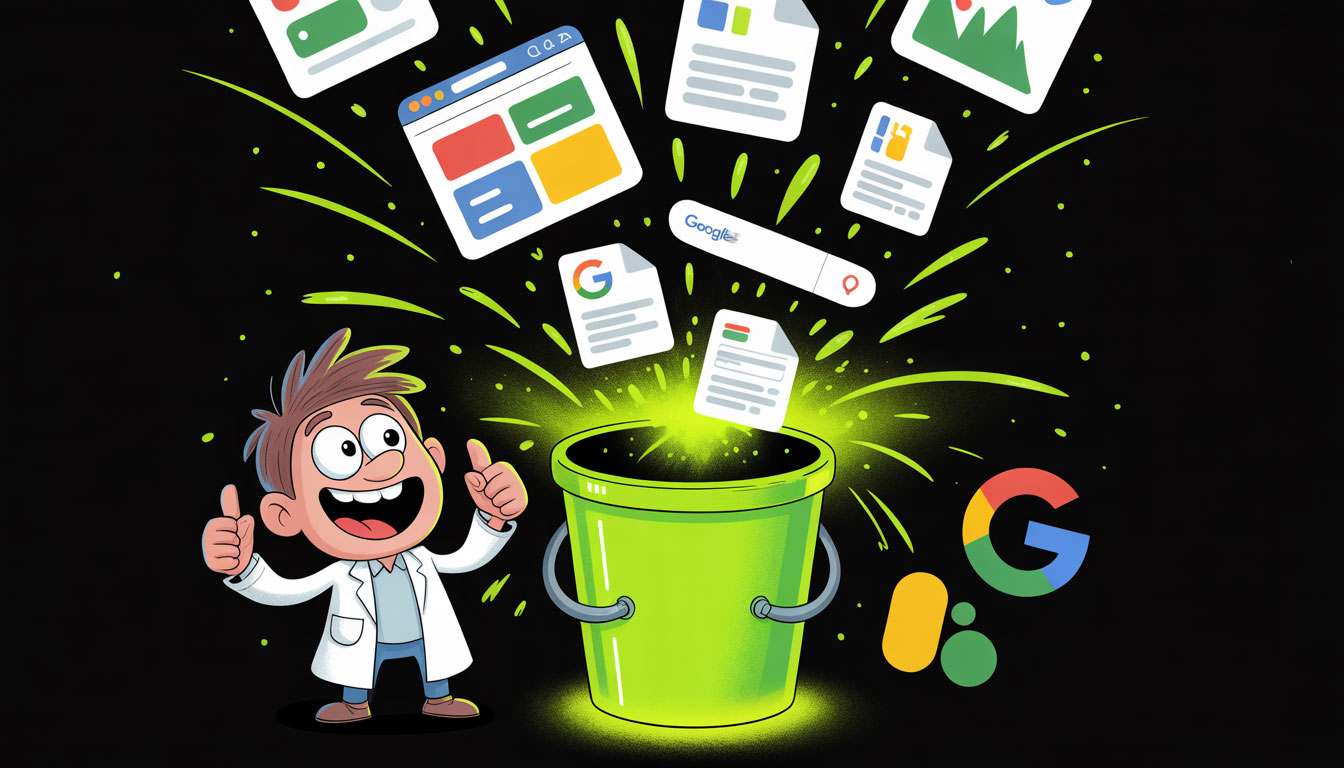
When an AI tool generates a response, it pulls information from three distinct sources. Think of these as buckets that feed into the answer.
Bucket 1: Model Memory
This is knowledge baked into the AI during training. When ChatGPT knows that Paris is the capital of France or can explain how photosynthesis works, that information comes from model memory. It was learned from massive amounts of text during the training process.
Model memory has a knowledge cutoff. Information that emerged after training isn't there. The AI doesn't "know" recent events from memory alone.
For content creators, model memory explains why established brands have advantages. If a brand appeared frequently in training data, the AI has "heard of" that brand. It might mention well-known companies, reference popular frameworks, or recall famous experts without needing to search.
The key point:
...you cannot directly influence model memory in the short term. It's fixed until the model gets retrained. Don't waste effort trying to optimize for it.
Bucket 2: Live Retrieval
This is where things get interesting. When AI tools search the web before responding, they're using live retrieval. Perplexity does this for every query. ChatGPT does this when search is enabled. Google AI Overviews pull from search results. Bing Copilot queries the web.
Live retrieval works through a process called RAG (Retrieval-Augmented Generation). The AI searches, finds relevant content, feeds that content into its context, then generates a response informed by what it found.
Here's the critical insight: live retrieval uses existing search indexes. When Perplexity searches for information, it's querying Google or Bing. The content that appears in AI responses is content that first ranked in traditional search.
This is the bucket you can influence.
Your content needs to rank in search results to get retrieved by AI tools. Everything you know about SEO still applies here.
Bucket 3: Private Data
This bucket includes uploaded documents, enterprise systems, API connections, and custom knowledge bases. When a company builds an internal AI assistant trained on their documentation, that's private data.
For content strategy purposes, ignore this bucket. You have no access to what companies upload to their internal systems. Unless you're building the AI product yourself, private data is outside your influence.
Why This Changes Everything (And Nothing)
Once you understand the three buckets, a lot of confusion clears up.
Your SEO skills still transfer. Content that ranks well in Google is content that gets retrieved by AI tools. The fundamentals haven't changed: quality content, proper structure, relevant keywords, authority signals.
But there's a new layer. Getting retrieved isn't enough. Your content also needs to be useful once the AI finds it. This means clear answers that can be extracted and quoted. Defined terms that translate into AI responses. Structured formats that AI can parse easily.
Query fan-out adds another dimension. AI tools don't search once. They expand your question into multiple related searches and combine results. Content that appears across several query variations gets more weight than content ranking for just one phrase.
What This Means for Your Strategy
Stop chasing mythical "LLM algorithms." There is no secret AI ranking system to decode. The retrieval layer uses search engines you already understand.
Focus on retrieval coverage. Don't optimize for a single keyword. Identify the cluster of related queries AI might search when answering questions in your topic area. Make sure your content appears across those variations.
Structure content for extraction. AI tools scan your content for quotable answers. Lead sections with clear statements. Define terms explicitly. Use formats like comparison tables and step-by-step processes that translate well into AI responses.
Build entity presence. Brand recognition in model memory takes time, but you can start now. Consistent publishing, mentions across authoritative sources, and topical authority all contribute to becoming a name AI tools "know."
The Real Answer to the Wrong Question
Remember the question: "Should I optimize for Google or for AI?"
The answer is that you're not choosing between two separate systems. AI visibility flows through retrieval systems you already know how to influence. Content that ranks well and is structured for easy extraction performs in both environments.
The work isn't different. It's the same work, done with awareness of how that content will be used once AI tools find it.
FAQ
Do all AI tools use live retrieval?
Not always. Basic ChatGPT queries without search enabled rely only on model memory. But Perplexity, ChatGPT with search, Google AI Overviews, and Bing Copilot all use live retrieval. For informational queries, assume retrieval is happening.
Can I get into an AI's model memory?
Not directly or quickly. Model memory is set during training, which happens periodically. Building brand presence over time increases the chance of being included in future training data, but this is a long-term play measured in years, not months.
Is traditional SEO still worth doing?
Absolutely. Live retrieval depends on search rankings. If your content doesn't rank in Google or Bing, AI tools won't find it during retrieval. Traditional SEO is now the foundation for AI visibility, not a separate strategy.
What's the difference between RAG and regular search?
RAG (Retrieval-Augmented Generation) is the process of searching, retrieving content, and feeding it to an AI to inform its response. Regular search just shows you links. RAG takes those results and synthesizes them into an answer. Your content needs to work for both.
Did you find this article helpful? Please share it!