The Sting of Watching Someone Else Get Cited
You asked ChatGPT a question about your industry. The response cited three sources. Your competitor was one of them. You weren't.You checked Perplexity. Same story. Your competitor's article appears in the citations. Yours doesn't exist as far as AI is concerned.
This is more than an SEO problem. It's watching someone else get credit for topics you've covered thoroughly. It's seeing traffic and authority flow to a competitor while your content sits invisible.
The good news: AI citation isn't random. There are specific reasons why one piece of content gets selected over another. Once you understand what's different, you can close the gap.
They Answered the Question Directly
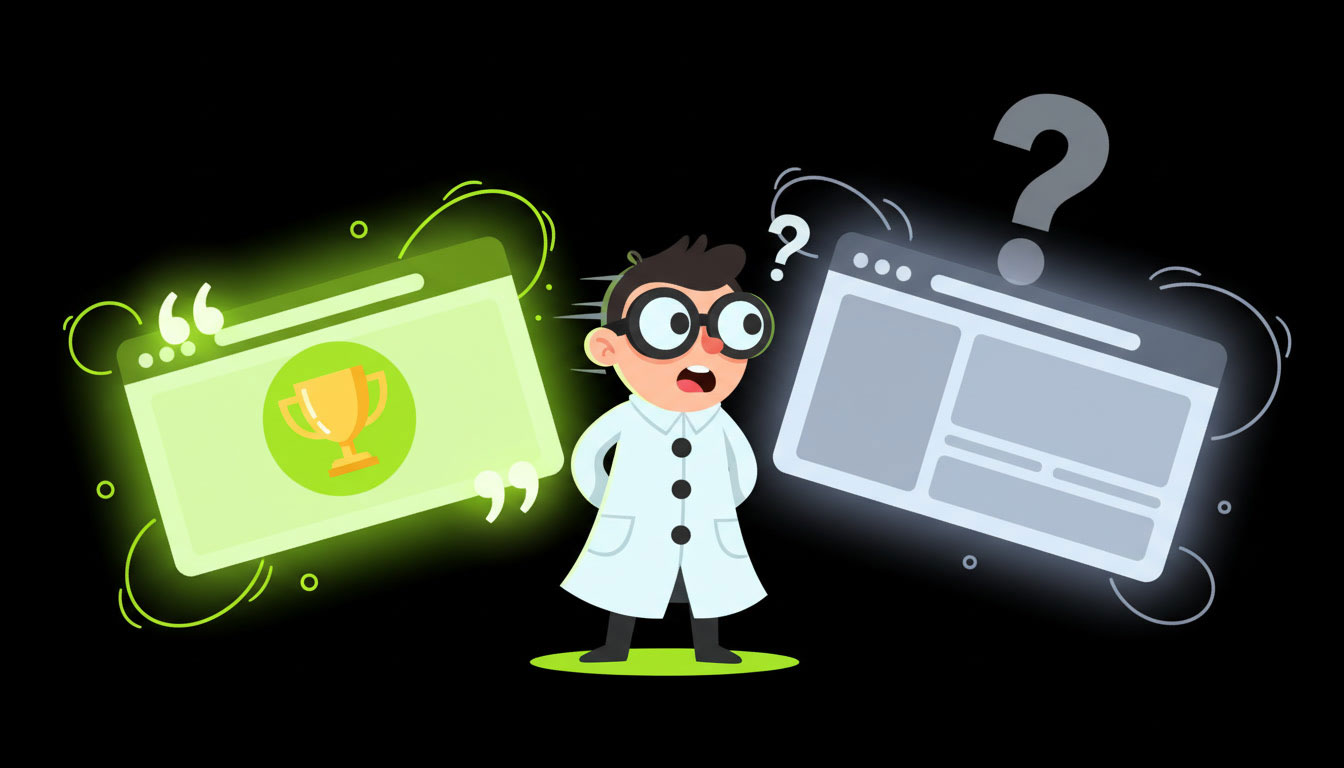
Pull up your competitor's cited content and yours side by side. Look at the first 100 words of each.Your competitor probably states their main point immediately. Clear, quotable, direct. No lengthy introduction building up to the answer. No "in this article, we'll explore..." preamble.
AI systems scan for direct answers. They're trying to respond to user questions efficiently. Content that buries the answer deep in the text loses to content that leads with it.
Check your own content. How many paragraphs does a reader have to get through before reaching your actual insight? If the answer is more than one, you've found your first gap.
Their Structure Is Cleaner
Look at how the two pieces are organized. Your competitor's content likely has a clear hierarchy: descriptive H2 headings that could almost stand alone as a summary, logical flow from section to section, consistent formatting throughout.
AI systems parse content structurally. They use headings to understand what each section covers and how pieces relate to each other. A clear structure makes content easier to extract and cite accurately.
Messy structure creates confusion. Inconsistent heading levels, vague section titles, walls of unbroken text. Even if the information is excellent, poor organization makes it harder for AI to use.
Compare your heading structure to theirs. Can someone understand the main points of their article by scanning headers alone? Can they do the same with yours?
They Built Stronger Authority Signals
AI systems evaluate source credibility before citing. They look for signals that indicate expertise and trustworthiness.Your competitor probably has visible author credentials. A real name, a bio explaining their expertise, maybe links to other published work. Their content likely cites authoritative sources, includes publication dates, and shows evidence of being maintained and updated.
Anonymous content struggles. Pages without clear authorship, without dates, without citations to support claims. AI tools won't risk their own credibility by citing sources they can't verify.
Look at your competitor's about page, author bios, and content footers. Then look at yours. The difference in trust signals is often stark.
Their Content Goes Deeper
AI systems prefer comprehensive sources. When multiple pieces cover the same topic, the one that addresses more aspects of the question wins.
Your competitor may have covered subtopics you skipped. They might have included examples where you stayed abstract. Their piece might answer follow-up questions a reader would naturally have, while yours stopped at the surface.
This isn't about word count. Thin content padded with filler loses to concise content that's genuinely thorough. The question is whether the content fully serves someone trying to understand the topic.
Read both pieces as if you knew nothing about the subject. Which one leaves fewer unanswered questions?
They Have Schema Markup
View the source code on your competitor's page and search for "schema" or "application/ld+json." You'll likely find structured data telling search engines and AI systems exactly what the content is, who wrote it, when it was published, and what topics it covers.
Schema markup is metadata that machines read. It removes ambiguity about what your content represents. AI systems can parse this data directly instead of inferring it from context.
If your competitor has Article schema, author markup, and FAQ schema while you have none, they've given AI systems a clearer picture of their content's value.
How to Close the Gap
You don't need to beat your competitor on everything. You need to close enough gaps that AI systems see you as an equally viable source.
Start with answer placement. Restructure your content so the key insight appears in the first paragraph of each section. This is the fastest fix and requires no new content creation.
Clean up your structure. Rewrite vague headings to be specific and descriptive. Ensure your heading hierarchy is logical (H1 for title, H2 for main sections, H3 for subsections only).
Add credibility signals. Create or improve your author bio. Add publication and update dates. Include citations to authoritative sources for factual claims.
**Fill depth gaps.** Identify subtopics your competitor covered that you didn't. Add sections addressing those gaps with genuine value.
Implement schema markup. Add Article schema at a minimum. Include the FAQPage schema if you have FAQ sections. Validate your markup with Google's testing tools.
Run a Side-by-Side Analysis
The most efficient way to identify your specific gaps is to analyze both pieces systematically.Our analyzer evaluates content against the factors AI systems prioritize: structure, answer placement, credibility signals, schema markup, and content depth. The comparison shows exactly where you're falling short and what to prioritize.
You don't have to guess why they're getting cited, and you're not. The differences are measurable.
Catching Up Is Faster Than Starting Over
Your existing content has value. It may already have backlinks, some search authority, and indexed history. Improving it is often more effective than creating new content from scratch.
Focus on your highest-priority pages first. The ones targeting your most important topics, the ones where competitor citations sting the most. Fix those, test the results, then work through the rest of your library.
AI visibility isn't winner-take-all. Multiple sources get cited for the same topics. Your goal isn't to eliminate your competitor from AI responses. It's to earn your place alongside them.